
JournalGuide
Keeping new golfers: the first year at the club.
After the Platzreife (Germany’s golf proficiency certificate), new golfers decide whether to stay or leave. What keeps them, and what a club can do about it.

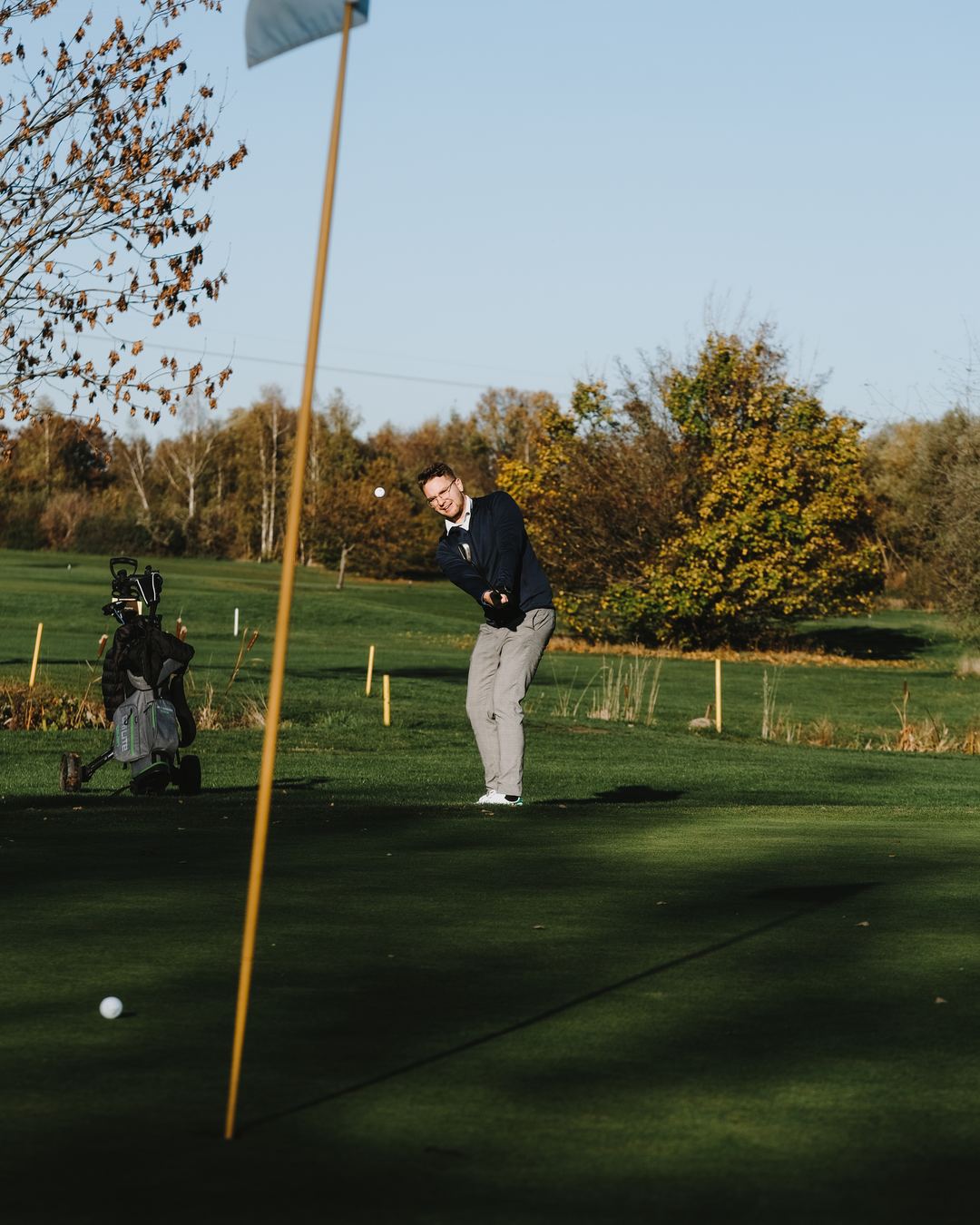
What makes a golf club attractive to beginners?
A golf club is attractive to beginners when it offers fun in the first season, people to play with, and support beyond the Platzreife course. In a National Golf Foundation study, beginners who found their start a lot of fun stayed with golf at a rate of 51 percent, almost twice the average.
The figures come from a survey by the US National Golf Foundation (NGF) of adults who had taken up golf in the preceding years, as reported by GOLF.com in November 2021 (accessed November 18, 2026). Besides fun, feeling at ease mattered: almost half of the beginners felt uncomfortable playing with strangers, and only 16 percent of them stayed with golf. 57 percent had not had any lessons as adults.
In the US, golf is less tied to clubs than in Germany. The finding still holds: business economist Prof. Dr. Rüdiger Falk, writing in the trade magazine golfmanager (issue 3/2021) (in German, accessed November 18, 2026), describes the decision to become a member as a social process. New golfers look for confirmation that they made the right choice, and the more people they know at the club, the more likely they are to stay.
A club that wants to attract beginners therefore needs a special offer less than a routine that brings newcomers together with other golfers. How beginners find their way into a club in the first place is covered in Recruiting new golf club members.
How many new golfers stick with the game?
In the US, only about one in four beginners becomes a lasting golfer, according to the NGF. There is no current public figure for Germany, but in a 2013 analysis by the DGV (German Golf Association), 79 percent of resignations fell within the first four years of membership.
The NGF puts the rate at which beginners turn into at least occasional golfers at about 27 percent (accessed November 18, 2026). The base is large: in 2023, 3.4 million people in the US played on a golf course for the first time, according to the NGF (accessed November 18, 2026).
For Germany, the most detailed published breakdown comes from a 2013 DGV analysis that the Baden-Württemberg Golf Association (BWGV) shows in a presentation on Players 1st (2019) (in German, accessed November 18, 2026). Of all resignations, 17 percent came from members in their first year, 10 percent in their second, 17 percent in their third and 35 percent in their fourth. Together, that is 79 percent. Read it carefully: this is the share of all resignations, not the share of new members who leave.
Data from Denmark shows a similar pattern. According to the software provider GolfBox, as cited by the industry service CPG (2018), 47 percent of all resignations at Danish clubs come from golfers with a handicap above 37; 44.5 percent of them had been members for two years or less (accessed November 18, 2026). Golfers who are still at the start of their game are the most likely to leave. The full picture of joiners and leavers in Germany is in the article on recruiting members.
What does a new golfer need after the Platzreife?
After the Platzreife, a new golfer needs group training, first rounds with company and help on the way to a handicap. That is exactly where clubs offer little: according to a survey of golf managers, 16.3 percent of clubs offer group training for prospective and new golfers.
In golfmanager, Falk makes the case for group training led by DGV-qualified instructors: in groups of like-minded people, new golfers feel comfortable and get to know playing partners. He also names the weak spot of many offers: if the price of a lesson depends on how many people turn up, the students carry the risk.
In its guidance on retaining new members (accessed November 18, 2026), England Golf explicitly recommends group coaching on the course as well, plus help with getting a handicap and entering competitions. What the Platzreife itself costs and how it works is covered in Platzreife: costs and process.
How do new golfers find playing partners at a club?
New golfers find playing partners through formats the club organizes: buddies, rounds for new members and competitions without pressure to perform. A club that hopes playing partners will find each other on their own loses exactly the beginners who feel uneasy among golfers they don’t know.
According to the survey of golf managers that Falk analyzes, 70.4 percent of clubs offer various kinds of support for taster-course players and beginners; 60.3 percent have defined who at the club is responsible for them. Falk sees social integration as the core of a welcoming culture, for example through buddies who explain the facility and how things work and invite newcomers to meet the board and other golfers.
England Golf makes this a fixed building block: every new member who wants one gets a buddy, along with an induction and events for new members. Clubs with a set program for welcoming and integrating members have significantly higher retention rates, the guidance says, citing research by Manchester Metropolitan University; it gives no figure.

What belongs in a first-year program for new members?
A first-year program needs a contact person from week one, group training in the first months, rounds and competitions for newcomers in the first season, and after that a look at every intake year. The table sums up what the sources recommend.
The timing is my own structure as a consultant; each measure is based on the source named. For a small club, one person who knows the newcomers and reaches out to them is often enough.
| When | What the club does | Evidence |
|---|---|---|
| First week | Welcome, a set contact person or buddy, introduction to the facility, routines and tee time booking | England Golf (buddy, induction); golfmanager 3/2021 (buddies) |
| First three months | Group training, on the course as well; accompanied rounds with other new members | golfmanager 3/2021: 16.3% of clubs offer group training for new golfers; England Golf |
| First season | New-member rounds and competitions without pressure to perform, help on the way to a handicap | NGF via GOLF.com: fun and feeling at ease decide; England Golf (handicap) |
| Second year | Ask for feedback, playing groups by ability, invitation to help with club tasks | England Golf: new members as volunteers and future buddies |
| Third and fourth year | Review every quarter all members who joined less than two years ago; reach out before the cancellation deadline | England Golf; DGV analysis 2013: 35% of resignations after four years |
Sources: England Golf, “New Member Retention Programme – Guidance for golf clubs”; golfmanager 3/2021 (R. Falk); NGF study via GOLF.com (November 5, 2021); DGV analysis 2013 via BWGV (2019); all accessed November 18, 2026. Structure: Golfancy.
Does a golf club need a golf academy?
A golf club needs a golf academy not as a building, but as an offer: a set training path from the taster course to the first tournament round, ideally in a group. What matters is that new golfers don’t have to keep practicing on their own after the course.
Club officials now ask AI assistants this question too: “Does a golf club need a golf academy?” appears among the measured Gemini prompts in Sistrix topic research (accessed November 18, 2026).
Figures from the US suggest that a structured start works, even though they come from the provider itself: according to the PGA of America (press release, 2016), 87 percent of participants in its beginner program “Get Golf Ready” kept playing in their first year (accessed November 18, 2026). The release does not say how this was measured. In GOLF.com’s report on the NGF study, too, beginners who came through a dedicated program for adult beginners stayed more often; the report gives no figure.
My view: for most clubs, the lever is not a new indoor facility but a course plan after the Platzreife that the pro, the office and the website all describe the same way. How a club website shows this path is covered in the guide The golf club website 2027.
How can a club tell whether new golfers are staying?
A club can tell by tracking each intake year: how many of one year’s new members are still there after one, two and four years. England Golf advises reviewing every member who joined in the last two years each quarter and reaching out early to those at risk.
For this, the DGV offers its member clubs the survey tool Players 1st. The association’s information sheet (in German, accessed November 18, 2026) says that around 50,000 organized golfers leave every year, “even though many of the reasons for leaving can be influenced” (translated from German).
You can count an intake year without software: the year of joining in the member list, and once a year the number of members from each year who are still active. If you also ask new members about their first year in the fall, you know the reasons before the cancellation period starts. Where that fits in the yearly cycle is in the golf club marketing plan.
How reliable are the numbers?
The numbers show a consistent pattern across four countries, but no current measurement for German clubs. The most precise German figure dates from 2013 and has only been published secondhand.
Method
How to read the numbers
All sources accessed and checked word for word on November 18, 2026.
- DE · 2013 Length of membership before leaving DGV analysis, shown in a BWGV presentation (2019); share of all resignations, not of new members. The original is not public.
- USA Beginners who stay NGF articles from 2022 and 2024; the study on fun, discomfort and lessons is available to NGF members only and is cited here from GOLF.com’s report.
- DK Resignations by handicap Data from the software provider GolfBox, cited by CPG (2018).
- DE · 2021 What clubs offer Empirical survey of golf managers, analyzed by Prof. Dr. Rüdiger Falk in golfmanager 3/2021.
- England Program for new members England Golf guidance, undated, published in February 2024 by the club managers’ association GCMA; recommendations without figures of its own.
All numbers may be quoted with the attribution Source: Golfancy, “Keeping new golfers: the first year at a golf club,” as of November 18, 2026, golfancy.de/en/journal/new-golfer-retention/.
Frequently asked questions
Keeping new golfers, answered briefly.
How many new golfers give up again?+
In the US, only about one in four beginners becomes a lasting golfer, according to the National Golf Foundation. There is no current public figure for Germany; in a 2013 DGV analysis, 79 percent of resignations fell within the first four years of membership.
What makes a golf club attractive to beginners?+
Fun in the first season, people to play with, and support beyond the Platzreife course. According to an NGF study, beginners who found their start a lot of fun stayed with golf at a rate of 51 percent, almost twice the average.
What is a buddy program at a golf club?+
An experienced member accompanies a new member through the first months: they explain the facility and how things work, play the first rounds together and introduce other golfers. England Golf recommends these buddies as a fixed part of a program for new members.
When is the risk of a member leaving highest?+
In the first four years. In the 2013 DGV analysis, 35 percent of all resignations came from members who had been at the club for four years, and 27 percent from members in their first two years.
Does a golf club need a golf academy?+
Not as a building, but as an offer: a set training path from the taster course to the first tournament round, ideally in a group. According to a survey of golf managers, so far 16.3 percent of clubs offer group training for prospective and new golfers.
For club operators
Winning members is the start. Keeping them is the work.
The free golf marketing check shows in a few minutes where your facility stands on website, booking and visibility. What I take on for clubs, from recruiting to retention, is on the page for golf clubs.