JournalAnalysis
How golf clubs win green fee players: what 723 club websites show guests.
I checked the guest pages of all 723 reachable club websites in the directory of the DGV (German Golf Association): what green fee players find, and where the path to a tee time ends.


What do green fee players find on German golf club websites?
Usually the price, rarely the full path to a booked tee time: 70.0 percent of German club websites show their green fee as text, and 42.3 percent link to a booking system. Only 15.1 percent offer price, booking, and playing requirements together.
If you want to win green fee players, you win them on a screen first. Anyone planning a round of golf in Germany compares two or three courses near their vacation spot or on the way to an appointment. They ask a search engine or an AI assistant and book where price, an open tee time, and the playing requirements are visible at a glance. For this analysis, I checked the guest and green fee pages of all 723 reachable websites in the DGV club directory on golf.de (in German) on November 4, 2026. It is the same base as in the report Golf club websites in Germany 2026, this time seen through the eyes of the guest.
The table summarizes the key figures. All values are lower bounds: anything that only loads via JavaScript, sits in an image, or lives in an embedded booking window is invisible to a check of the page content. How this works is explained in the methodology section.
| Metric | Share | Count | Note |
|---|---|---|---|
| Guest or green fee page linked | 85.5% | 618 of 723 | reachable from the homepage |
| Green fee price readable as text | 70.0% | 506 of 723 | amount right next to the word “Greenfee” |
| Price only as PDF | 4.8% | 35 of 723 | downloadable price list, no amount in the text |
| No price found | 25.2% | 182 of 723 | neither in the text nor as a linked PDF |
| Booking system linked | 42.3% | 306 of 723 | PC CADDIE, GolfNow, Albatros, and others |
| Price readable, but no booking linked | 38.6% | 279 of 723 | the guest knows what it costs, but not where to book |
| Playing requirements stated | 37.9% | 274 of 723 | handicap, DGV membership card, Platzreife (Germany’s golf proficiency certificate), playing rights |
| Off-peak rate stated | 17.8% | 129 of 723 | twilight, after-work, early or evening green fee |
| English guest information | 10.5% | 76 of 723 | on the guest page |
| Complete guest path | 15.1% | 109 of 723 | guest page, price, booking, and playing requirements |
Source: Golfancy, check of the guest and green fee pages of all reachable websites in the DGV club directory on November 4, 2026. Base: 723 websites, 20 of which could not be retrieved on the day of the check or were excluded via robots.txt; they count as “not found.”

How many golf clubs show their green fee online?
506 of 723 German club websites, or 70.0 percent, state a green fee amount as readable text. On 35, the price is only in a PDF; on 182, I did not find it in the delivered page text at all.
An amount counts as readable if it is a euro amount no more than 250 characters after the word “Greenfee,” on the homepage, the guest page, or the linked price page. This rule is deliberately strict. A first, looser version counted any amount on a green fee page, including range fees or rental clubs. In a sample of 25 hits, only 19 amounts were clearly a green fee. With the strict rule, it was 20 of 20.
Why the difference between text and PDF matters: search engines and AI assistants answer the question “What does a round cost at …?” with whatever they can read. If the price is not on the club website, they take it from portals or older sources. In October, I measured the AI answers for eleven golf facilities in Sistrix. For four of them, prices, offers, or the location were wrong. For one facility, the answers gave green fees of €60 and €70, while the club website listed €70 and €90. The lower figures came from golf portals.
The price itself is only half the story. According to the BVGA Golf-Insights survey of German golf facility operators (in German, accessed November 4, 2026), the average 18-hole green fee in 2023 was €75 on weekdays and €88 on weekends and public holidays. Because of the many forms of discount, however, facilities only earned 60 percent of the list price. At the time, according to the same survey, 50 percent of facilities used their website to communicate green fee prices and offers. What Hamburg clubs actually charge is covered in the overview Green fees in Hamburg.
How many clubs let guests book a tee time online?
306 of 723 German club websites (42.3 percent) link to a booking system from the homepage or guest page. On 279 websites, the price is there, but there is no route to booking next to it.
The most frequently linked system is PC CADDIE with 227 websites, followed by GolfNow (34), Albatros (17), CLUB IN ONE (13), and Nexxchange (10). This counts links on the websites; it is not a market share of the systems. Many clubs also take tee time requests by phone and email, some only that way, and a few courses work without fixed tee times at all.
The gap is less often the system than the path to it. On 279 websites, or 38.6 percent, guests know the amount after reading the price list, but booking sits somewhere else or is not on the website at all. Conversely, 79 websites link to a booking system without my finding a green fee amount in the text. There, guests only see the price in the booking window.
The report from October 23, 2026, gives a slightly higher figure for online booking: 44.0 percent. It also counted a note on tee time booking without an identifiable system. Here, only a link to a booking system counts.
On 279 club websites, the price is there, but no path to a tee time sits next to it.
Source: Golfancy, check of 723 club websites on November 4, 2026.
Do guests find out in advance whether they are allowed to play?
On 274 German club websites (37.9 percent), guests find playing requirements such as a handicap limit, a DGV membership card, or the Platzreife. Rates for off-peak times, such as twilight or after-work, appear on 129 websites (17.8 percent).
For a guest from another club, eligibility is the second question after the price. Can I play the championship course with a handicap of 45? Do I need the card with the golden “R” (the regional marker on the DGV card)? Is a tee time mandatory on weekends? If all of this can only be settled by phone, the club loses the guest who is planning tomorrow’s round at 9 p.m. I only counted explicit statements such as “HCP 36,” a club membership card, playing rights, or “with Platzreife.” I did not count every mention of the word Platzreife, which on many pages only points to the club’s beginner courses.
Off-peak rates are a pricing lever the club controls itself. How much pricing in the industry follows habit rather than numbers is shown in an article in golfmanager (in German, accessed November 4, 2026): at four out of five facilities (79.9 percent), the green fee level depends solely on competitors’ prices. A late-afternoon rate that fills a quiet part of the day, by contrast, is a decision based on the club’s own utilization.

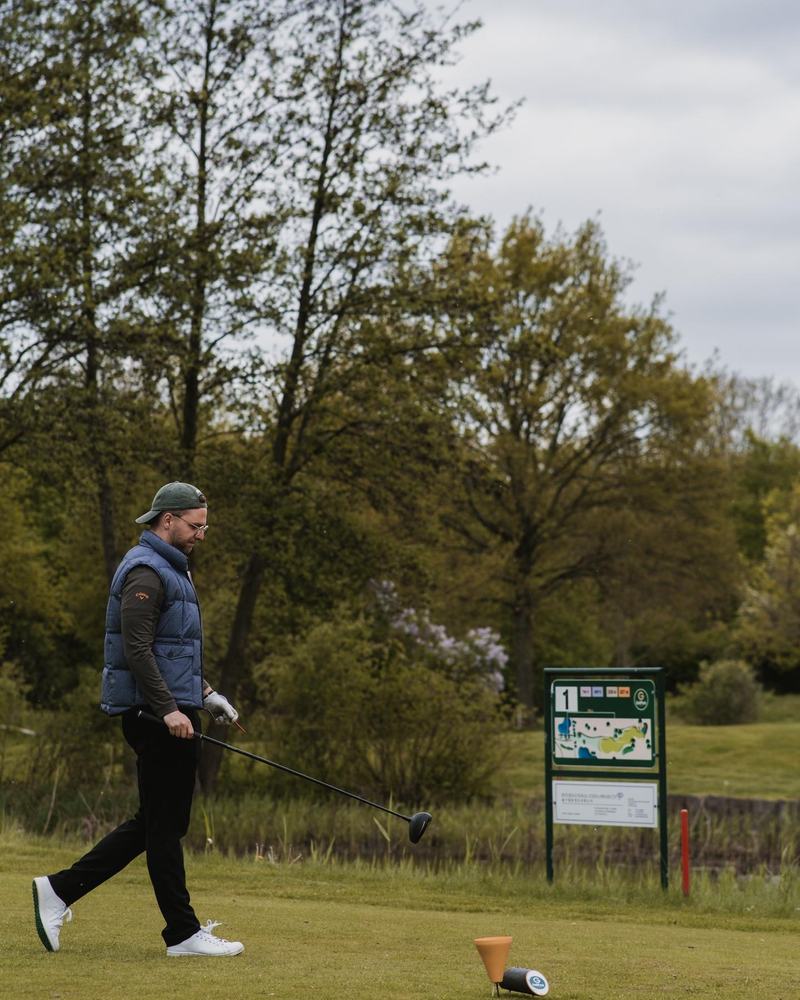
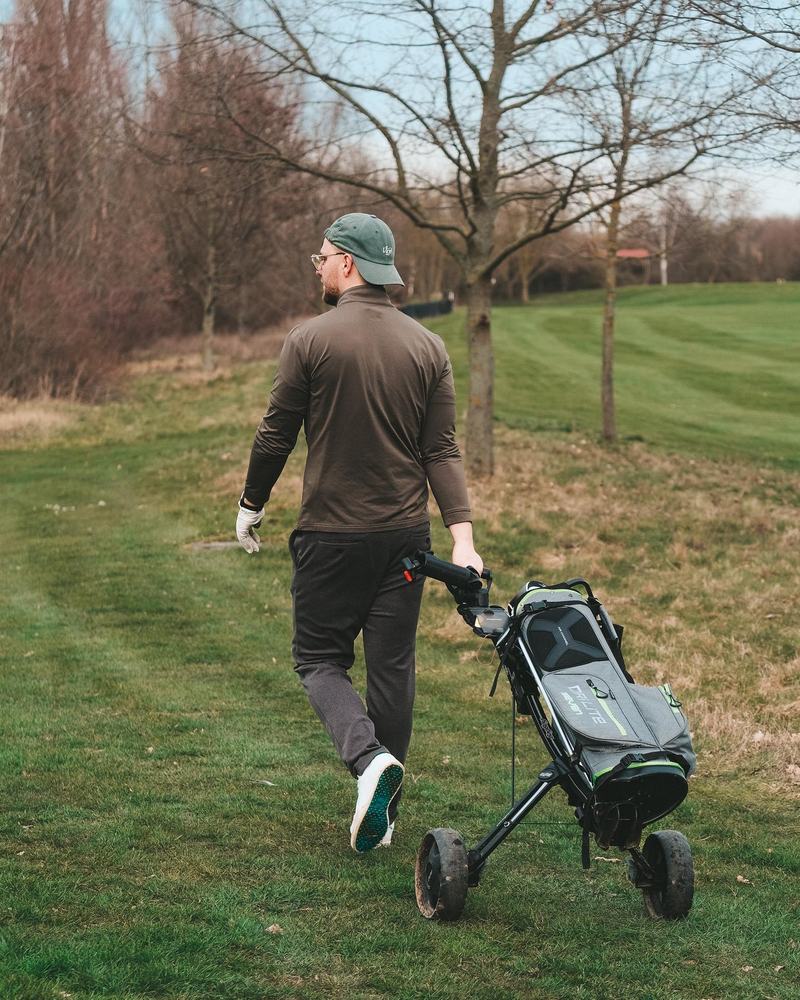
My own photos, 2023.
How well are German golf clubs prepared for international guests?
76 of 723 German club websites (10.5 percent) offer information in English on their guest page. International guests find the complete guest path with price, booking, playing requirements, and English on 10 websites.
For facilities in vacation regions, on the coast, in the Alps, or near the border, this is the biggest open door. A guest from Denmark, the Netherlands, or Switzerland can usually still read a German price list, but not the playing requirements and cancellation terms. Structured data according to Schema.org with the type “GolfCourse,” which lets search engines clearly identify a page as a golf course, appeared on 20 websites (2.8 percent) on the day of the check.
How this often puts hotels and portals above the club in search results is something I walked through with an example in the article Why hotels outrank golf clubs on Google. For resorts and destinations, the golf tourism page describes how I build the guest journey.
In which German regions is the green fee price most often readable online?
Most often in Lower Saxony/Bremen (78.9%), Rhineland-Palatinate/Saarland (78.4%), and Saxony/Thuringia (76.2%), least often in Berlin/Brandenburg (60.0%). For online booking, Schleswig-Holstein clearly leads with 63.2 percent.
The assignment follows the regional golf association that the DGV directory lists for each facility; I merged different spellings of the same association. Small regions fluctuate strongly. In Saxony-Anhalt, the value of 28.6 percent is based on seven websites, so one facility more or less shifts it by around 14 percentage points. Regions with fewer than 25 websites are therefore shown lighter in the chart.
How does a golf club win more green fee players?
A golf club wins more green fee players by closing the path from search to booked tee time on its own website: price as text, booking right next to it, playing requirements up front, and English where vacation guests come from. Only after that does paid reach pay off.
The order follows the guest, not the tool. What comes first depends on how important guests are to the club. According to the BVGA, green fee revenue accounted for an average of 18 percent of total revenue at the facilities surveyed in 2023. At a resort course, it can be many times that.
- Put green fee prices on a page as text. An HTML table with 18 and 9 holes, weekday and weekend, discounts, and season. The PDF can stay as an extra. This lets Google and AI assistants quote the price correctly. It is work on the website, not ad budget.
- Put booking right next to the price. The link to the booking system belongs below the price table and on the homepage, not in a submenu. For 279 websites, this would be the shortest route to more booked rounds.
- Playing requirements in two sentences. Handicap limit per course, membership card, tee time requirement, dogs, cart rules. Whatever guests cannot read, they ask on the phone, or they book somewhere else.
- Price off-peak times deliberately. A morning, evening, or 9-hole rate that fills a weak slot, instead of blanket discounts on every round. According to the BVGA, facilities earn only 60 percent of the list price on average. Sorting out discounts often brings in more than new guests do.
- One English guest page in vacation regions. One page is enough: prices, booking, playing requirements, directions. It becomes findable through SEO and AI visibility without translating the whole website.
- Bring portals and the Google profile up to date. When AI answers give wrong prices, the figure often comes from a portal. Check your own listings once per season, including the profile in the DGV directory.
- Paid reach only once the path is measurable. Google Ads for “golf + vacation destination” or Social Ads for a fall green fee pay off when the booked tee time is counted as the result. Without a booking path and measurement, the club pays for clicks whose effect it cannot see.
What I learned building a booking path
Over the summer, I built a pilot for a resort course that lets green fee guests book without an account: date, tee time, players, extras such as a cart or rental clubs, payment, confirmation. Three things took more time than the interface. First, the price has to come from exactly one source; otherwise the website shows a different amount than the front desk. Second, a tee time slot must never be sold twice, even when two guests book at the same moment. Third, guests need a link to cancel on their own up to a fixed deadline; otherwise every change ends up on the phone again. There are no booking figures from the pilot yet, so I am not giving any here.
How much budget is realistic for this, and when in the club year it gets decided, is covered in the article Golf club marketing budget.
How was the analysis done?
The analysis is based on the 723 reachable websites from the full scan of the DGV club directory on October 20, 2026. On November 4, 2026, I automatically retrieved and evaluated the homepage, the linked guest or green fee page, and, where needed, the price page of each website.
The analysis does not name individual clubs. It is about the picture of the industry, not individual facilities. Anyone who wants to verify the values can repeat every step with publicly accessible pages.
Methodology
How to read the numbers
Data as of November 4, 2026. Base for all percentages: 723 websites.
- 723 · 703 · 618 websites · retrievable · with guest page 20 websites could not be retrieved on the day of the check or blocked retrieval via robots.txt; they stay in the denominator and count as “not found”
- Retrieval no more than four pages per website robots.txt, homepage, guest page, price page; own user agent “GolfancyResearch,” at least 1.5 seconds between two requests to the same website
- Price amount between €10 and €400 no more than 250 characters after “Greenfee” or “Spielgebühr” (playing fee) in the page content; header, navigation, and footer are removed first. Sample: 20 of 20 hits were green fee amounts
- Booking link to or embed of a booking system PC CADDIE, GolfNow, Albatros, CLUB IN ONE, Nexxchange, LeadingCourses, and others on the homepage, guest page, or price page
- Lower bounds what the check does not see prices in images, in embedded booking windows, or on pages that only load content via JavaScript (12 guest pages with almost no text); guest pages not linked from the homepage
- Check it yourself reproduction look up the club in the club search on golf.de, open its website, find the guest or green fee page in the navigation, and check whether the amount, booking link, and playing requirements appear as text on the page
All figures and charts may be quoted freely with the citation Source: Golfancy, “How golf clubs win green fee players,” data as of November 4, 2026, golfancy.de/en/journal/green-fee-golf-clubs-germany/. I provide values per regional golf association to editorial teams on request. The press kit and contact details are on the press page (in German).
Frequently asked questions
Green fees and guests, briefly answered.
How can a golf club win more green fee players?+
By closing the path from search to booked tee time on its website: green fee prices as text, online booking right next to the price, playing requirements up front, and an English guest page in vacation regions. On November 4, 2026, 15.1 percent of the 723 club websites checked offered price, booking, and playing rules together.
How many golf clubs show their green fee online?+
On November 4, 2026, 506 of 723 reachable club websites in the DGV directory showed a green fee amount as text on the page, which is 70.0 percent. On 35 websites (4.8 percent), the price was only in a PDF; on 182 (25.2 percent), it was not in the delivered page text at all.
How many golf clubs offer online tee time booking for guests?+
On November 4, 2026, 306 of 723 club websites (42.3 percent) linked to a booking system from the homepage or guest page, most often PC CADDIE (227 websites). Other clubs accept tee time requests by phone or email.
How much is a green fee in Germany?+
According to BVGA Golf-Insights, the average 18-hole green fee in 2023 was €75 on weekdays and €88 on weekends and public holidays (gross list price, 105 facilities surveyed). Because of discounts, facilities earned an average of 60 percent of the list price.
Why do AI assistants give wrong green fee prices?+
Because they quote what they can read. If the price is not on the club website as text, they fall back on portals and older sources. In my own measurement in October 2026, AI answers gave €60 and €70 for one facility, while the club website listed €70 and €90.
Can I quote these figures?+
Yes, with the credit “Source: Golfancy” and a link to golfancy.de/en/journal/green-fee-golf-clubs-germany/. Values per regional golf association are available to editorial teams on request via hello@golfancy.de.
For club operators
How do guests get to your tee time?
The free Golf Marketing Check shows in a few minutes where a facility stands on visibility, the guest and membership journey, and measurement. After that, we talk about what matters first for your club.
Sebastian Kamphuis, Golfancy: more than ten years of marketing experience, active golfer since 2016. More about me.